
Kingston City Directory Collections
Kingston city directories are a historical shelf, not a single continuous list. The New York State Library identifies microfiche for 1857-1858 and film for 1866; 1877-1880; 1883-1885; 1887-1890; 1892-1914; 1916/17; 1921-1932; and 1935-1948. It also lists Kingston telephone books for 1940/41, 1944, 1944/45, 1947/48, 1949/50, and 1950/51. The library places those microforms in its 7th-floor Microforms Area. A missing year is a gap in the known run, not a reason to assume a nearby volume says the same thing.
| Collection | Years | Where Held | Access |
|---|---|---|---|
| NYS Library Kingston directories | 1857-58; 1866; selected runs through 1948 | NYS Library, 7th-floor Microforms Area | Microfiche and film |
| Kingston telephone books | Listed issues from 1940/41 through 1950/51 | NYS Library | Microform access |
| Digitized Kingston collection | 1888-89, 1889, 1891, 1892 | Ancestry collection | Searchable; subscription or library access may apply |
| Kingston Daily Freeman | 1895; 1903-1912 listed | Hudson River Valley Heritage route | Newspaper context, not a directory |
The holdings table on the NYS Library directory list is the best starting point for choosing a year. Check both the listed year and the physical page before citing an address or household.
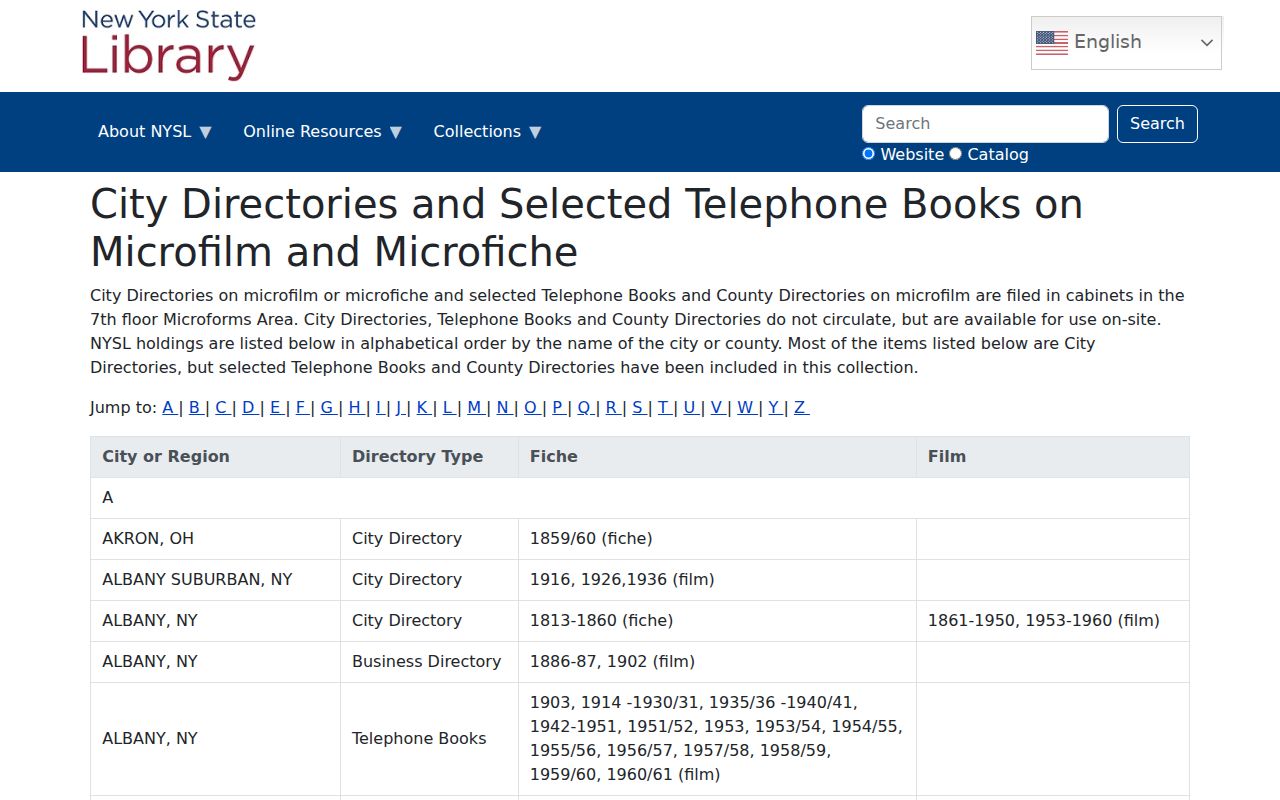
The listing shows why a careful Kingston city directory search follows the actual year runs rather than blending separate publications into one timeline.
Kingston City Directories by Repository
Repository choice affects what can be checked. The Kingston Library points researchers to local history, genealogy resources, and the Kingston Immigrant Oral History Collection, but its digital-resources page does not promise a complete directory run. Library staff and repository catalogs are useful when a name is not exposed by an open-web search. The Ulster County Library Association’s history and genealogy hub leads to Hudson River Valley Heritage newspapers, FamilySearch, NARA, NYS Archives, the Ulster County Historical Society, the NYS Library, and DOH resources.
The UCLIB History & Genealogy page is a useful repository map for a Kingston city directory project. A link from that hub identifies a place to investigate, but it does not establish that every linked collection contains the person being researched.
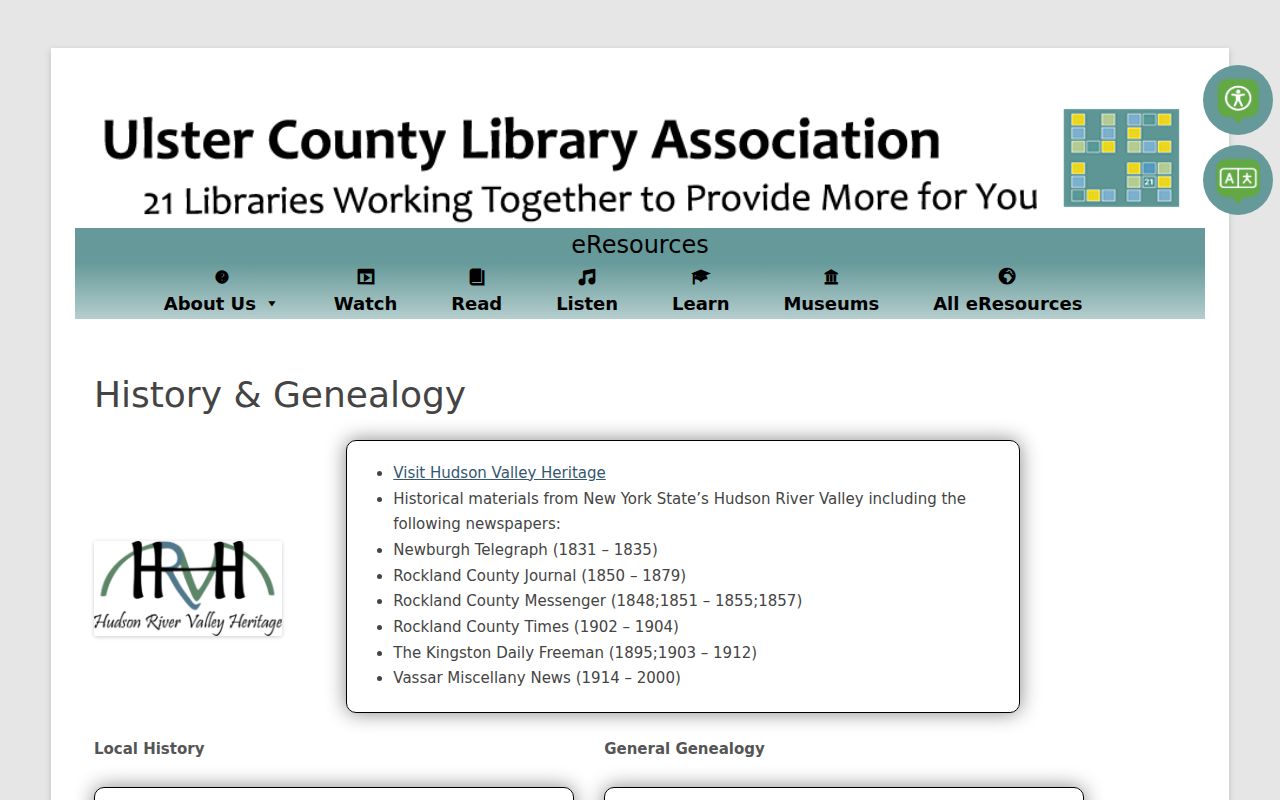
Use the hub to add a newspaper or archive source only after recording the directory volume, year, and page that prompted the search.
For material that a clerk holds but the public index does not surface, the county Records Center at 300 Foxhall Avenue is the documented escalation route for archival retrieval, micrographics, scanning, and digital reformatting services.
Digitized Kingston City Directories
The digitized Kingston directory collection offers searchable runs for 1888-89, 1889, 1891, and 1892. It describes more than 34,500 transcribed names, mostly heads of households, with address and occupation information. That makes it a practical discovery tool when the target year falls within those four runs. It is narrower than the NYS Library microform coverage, and the transcription should be compared with the page image before a name or address is relied upon.
The digitized Kingston directory collection provides the faster name-search route for its listed volumes. Access may depend on a subscription or a library connection, so a search result should be saved with the image page and volume context.
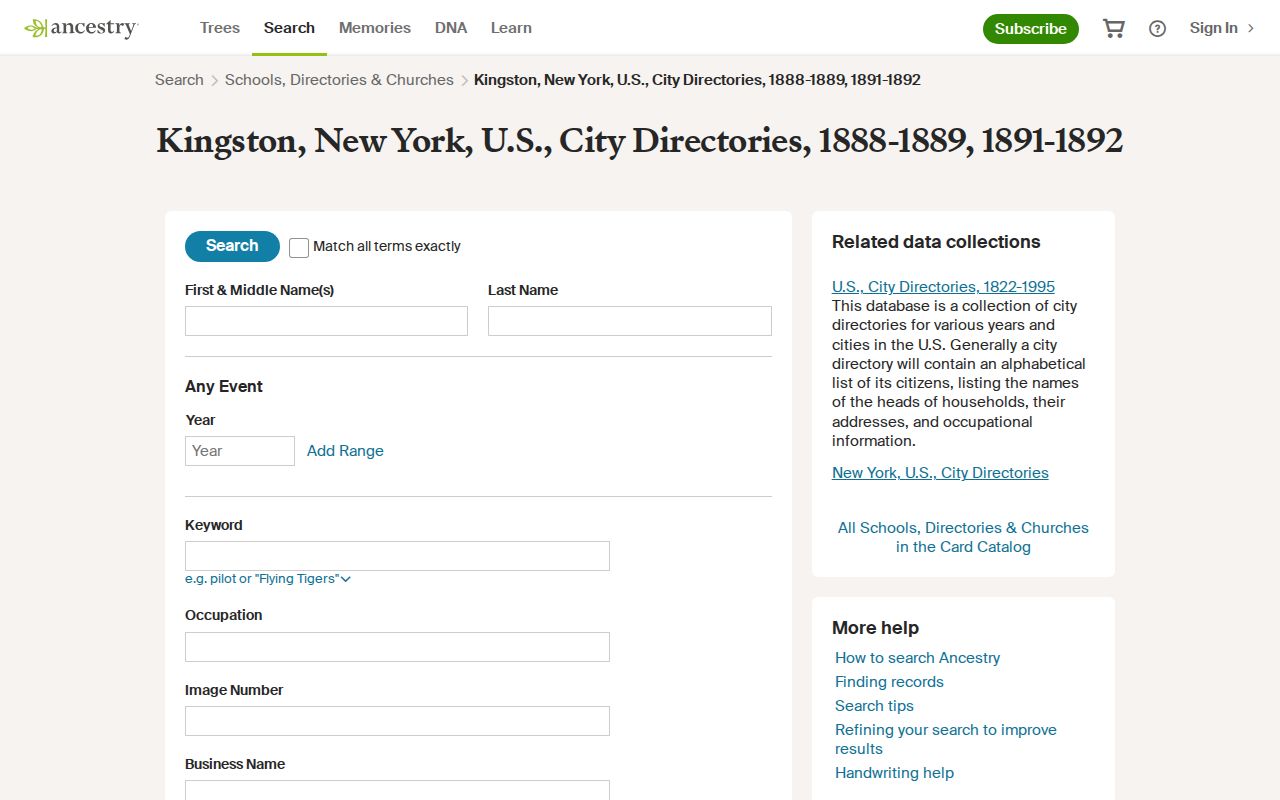
A typed transcription can misread initials, punctuation, and old type, which is why the Kingston city directory image remains the stronger citation.
Reading a Kingston City Directory
A city directory entry is evidence from a printed edition. Capture what the entry actually prints, then capture enough publication detail for someone else to find it again. The research record should distinguish a listed address from an ownership record and should not convert an occupation field into a broader claim about a household. Directory marks and abbreviations vary by volume, so the abbreviation key from that volume is part of the evidence.
| Printed name | Record initials, surname, and spelling exactly as printed. |
|---|---|
| Address | Keep the street and number with the volume year; it is a dated listing. |
| Occupation | Capture it only if the entry shows one, without expanding its meaning. |
| Household role | Record any role or relationship only where the volume supplies it. |
| Citation | Include directory title, year, page, publisher, and repository. |
- Criss-cross directory
- A directory arranged by address or street rather than mainly by surname. The research did not document a Kingston criss-cross run, so confirm one with the holding repository before assuming it exists.
- Householder index
- An index organized around the household or address entry. It helps locate a printed listing but does not prove ownership.
- Abbreviation key
- The volume’s own explanation of shortened terms and marks. Photograph or note it before interpreting an unfamiliar entry.
Kingston City Directory Place Names
Older Kingston city directories need a place-name check. The modern city formed in 1872 through the consolidation of the Village of Kingston, the Village of Rondout, and the Hamlet of Wilbur. Earlier material may use Kingston, Rondout, Wilbur, or a town-era jurisdiction for the same physical place. Stockade/Uptown, Midtown, and Rondout are useful research geographies, but they are not substitutes for a parcel number or a dated jurisdiction field.
Test the historic place label alongside the street and number. Rondout’s canal-port growth followed the opening of the Delaware and Hudson Canal in 1828, while the original Stockade street plan dates to 1658. Those dates help explain cataloging and address language; they do not identify a resident. Note: The record’s own date and jurisdiction control when historical labels conflict.
Tracing Kingston City Directory Households
Follow one household across the known Kingston city directory years, but keep each result tied to its publication. Start with the closest available year, then move backward and forward through the documented runs. Pair directory years with census, deed, vital, newspaper, or archive evidence only when the names, address, and date fit. For a modern parcel trail, the Kingston by-street directory uses the county’s address-keyed sources rather than the historical shelf.
- Choose the nearest confirmed directory year and record the page image, printed name, address, and any occupation or household wording.
- Search the next listed directory year in each direction, noting spelling changes, moves, and new or missing entries without filling unlisted years.
- Pair a surviving directory entry with the appropriate census, deed, vital, or newspaper source and preserve each source’s date.
- Use the directory title, publisher, year, page, and repository in the final citation so the entry can be rechecked.
A disappearance can reflect a move, death, non-listing, a changed spelling, or a missing volume. It is not proof of any single event. The best next source depends on the date: directories and the Kingston Daily Freeman can provide historical context, while a recorded deed can test an ownership claim.
Kingston City Directory Context Records
City directories work best beside records that answer a different question. The Ulster County Historical Society operates Bevier House and accepts research queries by appointment. Its NY Heritage Bruyn House item is a helpful example of careful metadata: it identifies a historic postcard, an address, named people, collection, repository, identifier, date when supplied, and rights statement. It still needs independent directory or deed corroboration for a household conclusion.
The Ulster County Historical Society research route is appropriate for a collection inquiry or historic-place context. It is not a current-name index, and a historical image should not be treated as proof that a person lived at the location continuously.
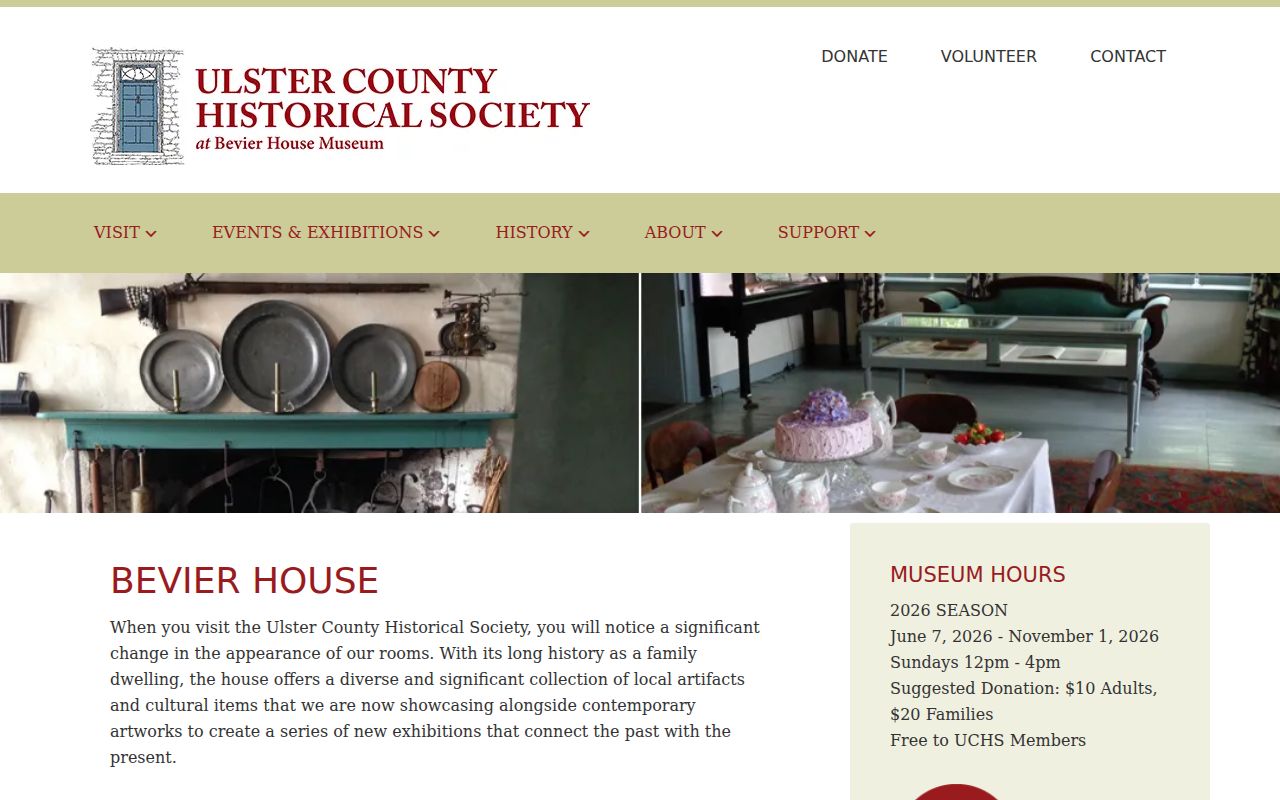
Historical-society material can deepen a Kingston city directory citation with place and family context while leaving the directory volume as the source for the listed entry.
Kingston City Directory Early Sources
When a Kingston city directory does not reach the needed period, keep the collection change visible instead of extending the directory backward by assumption. The county clerk’s Dutch Heritage archive describes a first record dated May 31, 1658, clerk custody from 1671, late-nineteenth-century translations by Dingman Versteeg, and a searchable English database produced through a 2008 project. Court minutes and Secretary’s Papers include deeds, agreements, wills, and contracts through 1683. Those records are a separate early-history path, with historic language and jurisdiction that must remain attached to every result.
| 1658 | The Dutch Heritage archive identifies its first record. |
|---|---|
| 1671 | Clerk custody begins with the first clerk cited by the archive. |
| 1683 | The documented court minutes and Secretary’s Papers extend through this year. |
| 1872 | Kingston, Rondout, and Wilbur consolidated into the modern city. |
For nineteenth- and twentieth-century context, the Kingston Daily Freeman runs listed through Hudson River Valley Heritage can add a notice, organization, property event, or public-life detail. Capture its publication title, issue date, page, headline, and item context. A newspaper item complements the Kingston city directory entry; it does not establish a continuous residential history.
Kingston City Directory Access Limits
There is no complete official open-web directory of current Kingston residents in the inspected sources. The historical collections are valuable because they document a particular publication date, not because they create a present roster. Newspaper notices can identify a household, organization, address, or event, yet an announcement does not establish continuous residence. Oral-history transcripts can add migration or community narrative, but the collection notes that transcripts may contain inaccuracies.
Vital records can corroborate a historical event, but they are not open directory files. Kingston’s local registrar records births and deaths occurring in the city and marriages obtained in Kingston from July 1881, subject to relationship, identification, certificate, and request rules. State genealogy access has separate age and death-status requirements. Specialized public-safety systems are likewise not city directories and should never be used to turn a historic name match into a current-residence claim.
For protected people, New York’s Address Confidentiality Program uses a substitute mailing address for eligible participants, while the actual physical address remains confidential. Confidential voter registration is a separate protection route. Do not try to reconstruct a protected address from directories, property clues, utility records, or court material. Note: A privacy-related search gap can be the correct result, not a research failure.